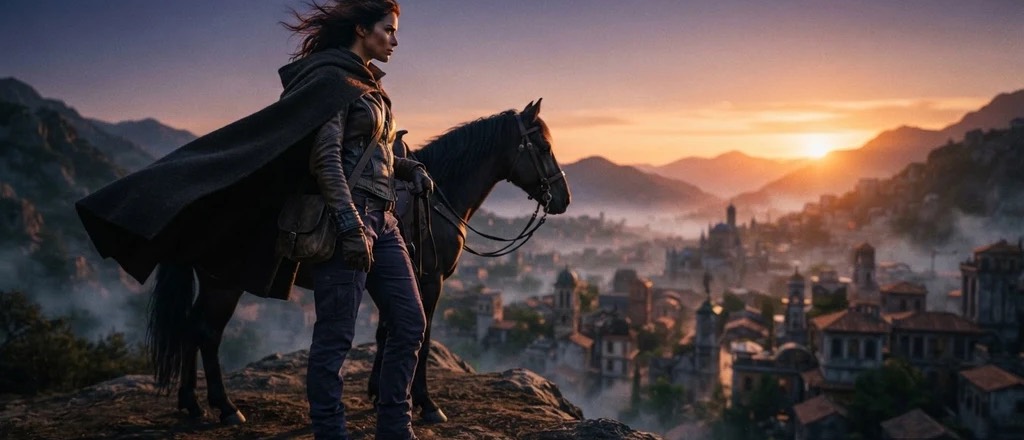
The first-message formula
Your first message isn't a character profile or a three-paragraph synopsis. It's a frame where something is already happening. Build it from four details:
- Place. Not "a tavern" but "the far corner of the tavern, where the table is sticky with beer."
- Time. Night, dawn, the last five minutes before closing. The time sets the mood.
- An action that has already happened. You just dropped a mug, walked in without knocking, put a letter on the table.
- Something unresolved. A question, a request, something strange: whatever the character will want to respond to.
Example: "The tavern is nearly empty. I set down a mug you didn't order in front of you and sit across from you. 'I was told you know the way over the pass.'" Three sentences, and the character has a place, a reason, and a question.
The unresolved part should be something the character can take hold of. "I'm sad" is a dead end. "I was told you saw my brother" is a hook.
The second and third messages
The most important part isn't the first message but the next two. The model watches how you write and adapts: length, tense, actions in asterisks or in prose, how dialogue is punctuated. If you want long, literary replies, write a bit longer yourself. If you want a quick back-and-forth, keep your turns short.














Comments